
The questions to ask a dog boarding facility are the difference between a stay you worry about and one you barely think about. Boarding facilities don't come with official star ratings, so the only way to really know a place is to ask, look around, and listen to how they answer.
We get asked plenty of these questions at our front desk in Mount Pleasant, Iowa, and we think every owner should ask them, wherever they board. Here's the checklist we'd use ourselves, grouped by what actually matters to your dog.
Why does it matter which questions you ask a dog boarding facility?
It matters because your dog can't tell you how their stay went. The answers you get before booking are your best preview of how your dog will be fed, rested, supervised, and handled when you're not there.
Think of it like a job interview where you're hiring someone to care for your family. You wouldn't just ask about price. You'd ask how they handle a bad day.
Good boarding facilities expect these questions. VCA Animal Hospitals (opens in a new tab) suggests asking about vaccines, accommodations, daily schedules, medication handling, and emergency plans before booking any pet's stay.
What health and safety questions should you ask first?
Start with health and safety questions, because everything else depends on them. These tell you how a facility protects your dog from illness, injury, and the unexpected.
- Which vaccines do you require? Rabies, distemper combination (DA2PPV), and Bordetella are standard. Many facilities also require canine influenza. Ask about timing too, since some vaccines need to be given days before arrival to count.
- Do you require dogs to be spayed or neutered? Policies vary, especially for older puppies and group play.
- Is your staff trained in pet first aid and CPR? Training should be current, not a one-time certificate from years ago.
- What happens if my dog gets sick or hurt? Listen for a named emergency vet, a clear call process, and how they reach you if you're out of cell range.
- Who is on site overnight, and how often are dogs checked? "We lock up at 7" is a very different answer from scheduled overnight checks.
- Can you give medications? Ask how doses are logged and who gives them, especially for insulin or timed medications.
The American Veterinary Medical Association (opens in a new tab) notes that canine influenza spreads easily where dogs gather, which is why many boarding and daycare facilities require the vaccine.
At Bark Blvd, our vaccination and health policy lists every required vaccine and its timing in plain language, so you know exactly what to bring before you book.
Where will your dog sleep and spend the day?
Ask to see exactly where your dog will sleep, eat, and rest. Accommodations vary more than anything else in boarding, from shared kennel runs to private suites.
Questions worth asking:
- Is the sleeping space private, shared, or a kennel run?
- Is the building climate-controlled in summer and winter?
- Can dogs from the same household stay together?
- Can I bring my dog's own bed, blanket, or toy?
- How loud is the space at night?
Noise is underrated. A dog who can't rest because of constant barking comes home exhausted and stressed, even if the facility looks great. If you're weighing room styles, our comparison of cage-free dog boarding vs kennels breaks down the trade-offs.
How are play groups and daily activity handled?
Ask how dogs are grouped, supervised, and rested. Group play can be a highlight of boarding, but only when it's well managed.
- How are play groups formed? Size, temperament, and play style should all count, not just size.
- What's the staff-to-dog ratio during play? You want trained eyes on the group at all times.
- How long do dogs play, and when do they rest? Nonstop play leads to overtired dogs and more scuffles.
- What if my dog doesn't enjoy groups? Look for solo play options for shy, older, or selective dogs.
Here's a simple test. Ask what happens when two dogs start to get too rough. A confident team will describe how they read body language, step in early, and rotate groups.
What should you ask about food, routines, and special needs?
Ask whether the facility will match your dog's normal routine as closely as possible. Sudden changes in food and schedule are a common cause of upset stomachs during boarding.
- Can I bring my dog's regular food, and will you follow my feeding schedule?
- How do you track whether my dog is eating, drinking, and going to the bathroom normally?
- Can you handle senior dogs, dogs with mobility issues, or anxious dogs?
- What do you do if my dog stops eating?
Daily check-ins make a real difference here. Every Bark Blvd stay includes a daily 5-Point Wellness Assessment covering appetite, elimination, energy level, coat and skin, and behavior, so small changes get noticed early.
How will the facility keep you updated?
Ask how and how often you'll hear about your dog. Some owners love daily photos. Others just want a call if something changes. Either way, you should know what to expect before you leave.
- Do you send photos, videos, or report cards?
- Is there a livestream or webcam?
- Who calls me if something changes, and how quickly?
- Can I call to check in?
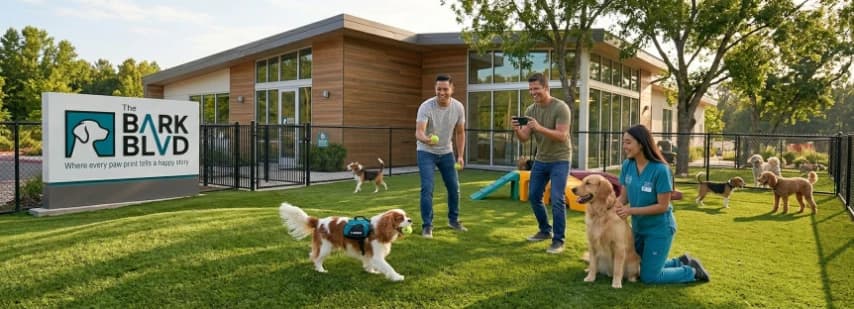
Can you tour the dog boarding facility before booking?
You should always tour a boarding facility before you book. Seeing is believing, and a short visit tells you things no website can.
Use this quick tour checklist:
| Look for | Green flag | Red flag |
|---|---|---|
| Smell | Clean, with a light cleaning-product scent | Strong urine or chemical smell |
| Noise | Barking that settles quickly | Constant, frantic barking |
| Dogs | Relaxed bodies, resting or playing | Pacing, cowering, or overcrowding |
| Staff | Answers questions openly, knows the dogs by name | Rushes you, avoids specifics |
| Paperwork | Clear policies on vaccines, cancellations, and emergencies | Vague or "we'll figure it out" answers |
| Access | Happy to show sleeping and play areas | Won't let you past the lobby |
Industry membership is another signal worth checking. Facilities that belong to the International Boarding and Pet Services Association (opens in a new tab) have access to training and safety resources for pet care businesses.
What are the red flags when choosing a dog boarding facility?
The biggest red flags are vague answers, no vaccine requirements, and no tour. Any of these should make you pause before booking.
- No proof of vaccination required for other dogs
- Staff can't name their emergency vet
- No clear overnight supervision plan
- Large play groups with little supervision
- Pressure to book or pay before you've seen the space
Honest caveat: no facility is perfect for every dog. A great boarding facility might still be the wrong fit for a dog with severe separation anxiety or certain medical needs, and a good team will tell you that.
How can you prepare your dog once you've chosen?
Once you've picked a facility, a little preparation makes the first stay easier. Book a trial day or short overnight, keep goodbyes brief and upbeat, and pack familiar food and a comfort item.
For the full rundown, see our guides on how to prepare your dog for boarding and our dog boarding checklist of what to pack.
When you're ready, take a look at our dog boarding in Mount Pleasant, IA, with private climate-controlled suites, structured play, and photo and report card updates. Planning a longer trip? Our long-term dog boarding keeps routines steady for extended stays. And if your dog only needs daytime care, dog daycare may be a better fit.
Frequently asked questions
What vaccines does a dog need for boarding?
Most facilities require rabies, a distemper combination vaccine (often DA2PPV), and Bordetella. Many also require canine influenza. Timing matters, because some facilities need vaccines given 7 to 14 days before arrival. Check the facility's written policy early so you have time to book a vet visit if anything is due.
How do I know if a boarding facility is safe for my dog?
Tour it, ask about vaccine rules and overnight supervision, and ask who their emergency vet is. Look for clean spaces, calm dogs, and staff who answer specifics without hesitation. Online reviews help, but a visit tells you more. A safe facility will also be honest when your dog might not be a good fit.
Should I do a trial stay before boarding my dog?
Yes, especially for first-time boarders, puppies, and anxious dogs. A daycare visit or one-night stay lets your dog learn the space while the stakes are low. It also lets the staff learn your dog's habits. Plan it a week or two before your trip so there's time to adjust.
Is it better to board my dog or use a pet sitter?
It depends on your dog. Social, adaptable dogs often enjoy boarding with structured play. Senior dogs, dogs with complex medical needs, or dogs who struggle in new places may do better at home with a sitter. Think about supervision too, since a facility has staff on site.
How far in advance should I book dog boarding?
For holidays and summer weekends, book several weeks ahead, because popular facilities fill early. For ordinary weekdays, a week or two is often enough. Booking early also leaves time for a tour, a trial stay, and any vaccine updates.
What should I pack for my dog's boarding stay?
Pack your dog's regular food, any medications with clear instructions, and one familiar comfort item. Leave expensive toys and bulky beds at home unless the facility says otherwise. Our packing checklist covers the full list.
The bottom line
The best dog boarding facility is the one that answers your questions clearly, shows you everything, and treats your dog like an individual. Bring these questions to ask a dog boarding facility to every call and every tour, and trust what you see as much as what you hear.