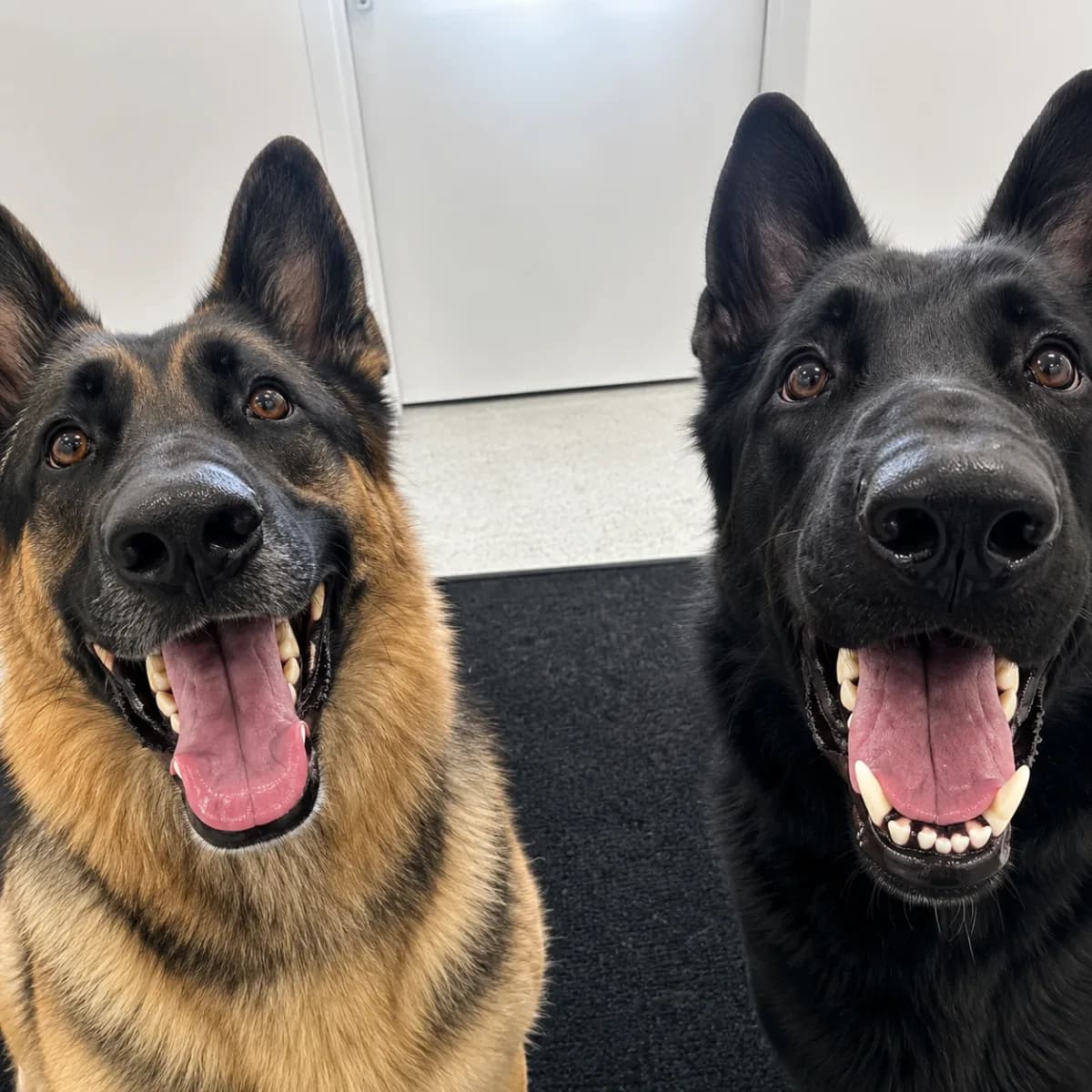
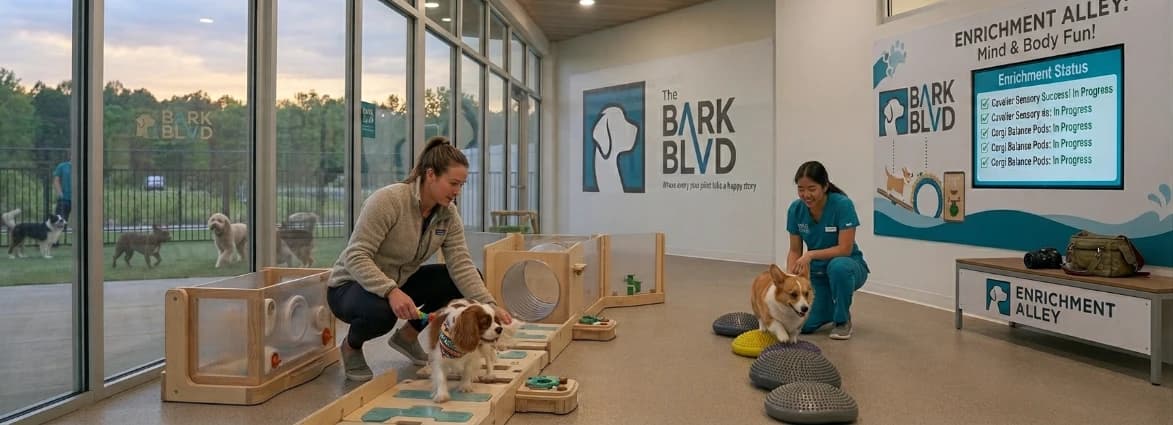
A dog daycare meet and greet is the first step before your dog's first full day of play. It's a short, low-pressure visit where trained staff watch how your dog handles a new place, new people and new dogs.
Some owners call it a temperament test, and that makes it sound like an exam your dog can flunk. It's closer to a first playdate with a referee. The goal isn't to judge your dog. It's to find the right playgroup, or the right alternative, so every dog on the floor stays safe.
What is a dog daycare meet and greet?
A dog daycare meet and greet (also called a daycare evaluation or temperament evaluation) is a supervised introduction that shows staff how your dog behaves in a group setting. Every dog at BARK BLVD completes one before attending dog daycare or dog boarding.
Our team looks at three things:
- Temperament: how your dog reacts to new people, handling and a busy space
- Play style: chase, wrestle, sniff and wander, or watch from the side
- Comfort around other dogs: relaxed, curious, overwhelmed or pushy
After your dog passes, we keep watching. A dog's play style can change as they settle in, so placement is never locked in on day one.
How do you prepare your dog for a daycare evaluation?
Prepare by sorting out paperwork early and giving your dog a calm morning. Missing vaccine records and an overexcited dog are two of the easiest problems to avoid, and neither says anything about your dog's personality.
Here's the checklist:
- Check vaccination requirements. Rabies, DA2PPV, Bordetella and Canine Influenza must be current. See our vaccination and health policy for timing rules.
- Time the Bordetella. Intranasal Bordetella must be given at least 7 days before arrival. Oral or injectable needs 14 days.
- Confirm spay or neuter status. Dogs over 6 months need to be fixed for group play. Our spay and neuter policy explains the options.
- Exercise lightly that morning. A short walk takes the edge off. A long run can leave your dog too tired to show their real personality.
- Know what to bring: a leash and collar that fit well. Arrive a few minutes early.
If you recently adopted your dog, wait until they've been in your home for at least 90 days. New dogs need time to decompress before a busy group setting tells us anything accurate.
What happens during a dog daycare meet and greet, step by step?
The temperament test follows a predictable order, so your dog is never thrown into a full room on the first try. Here's what a typical meet and greet looks like:
- Check-in. We review vaccine records, health history and anything you want us to know about your dog.
- Meeting the team. Your dog greets a staff member on leash, at their own pace. We watch body language: loose wiggles, sniffing and a soft mouth are great signs.
- Handling. Staff gently touch paws, ears and collar, the same handling your dog will get during a normal day.
- Dog introductions. We introduce one calm, dog-savvy dog first, then add others slowly if things go well.
- Group fit. We note your dog's play style and energy so we can place them in the right group.
- Debrief. You get our read on how it went and the next step.
The whole visit takes about 20 to 30 minutes.
How are dogs placed into playgroups after the meet and greet?
Dogs are placed by size, temperament and energy, never by breed. BARK BLVD runs four indoor and four outdoor playgroups, so a shy 12-pound terrier isn't sharing space with a pack of rowdy labs.
Think of it like seating at a wedding. You wouldn't put the quiet great aunt next to the speakers. Matching dogs by play style is what keeps a group fun instead of stressful. Rest is built into the schedule too, and the lobby closes from 12:00 to 2:00 PM for nap time.
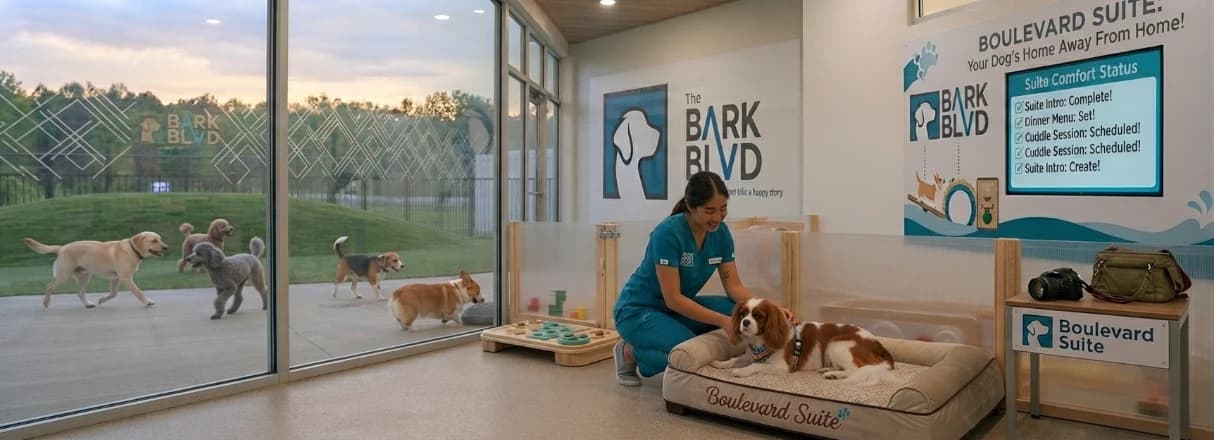
What if your dog doesn't pass the meet and greet?
If your dog isn't ready for group play, that's useful information, not a dead end. Common reasons a dog isn't placed in a group right away include:
- Fear or shutdown: hiding, trembling or refusing to move
- Overarousal: nonstop mounting, barking or bullying that doesn't settle
- Guarding: stiffening over toys, food or space
- Paperwork gaps: missing or too-recent vaccines
Dogs who prefer people over other dogs can still visit. Our Solo Play option gives one-on-one attention and play with our trained team instead of group time. Dogs must be fully people-friendly to join.
Puppies and young dogs who struggle with group manners often do well with structure first. Our puppy training program includes daycare on every program day, so socialization and lessons happen together.
Ready to get started? Book your dog's meet and greet at BARK BLVD, or call our team at 319-710-6500 with questions.
What should you expect on the first day of daycare?
Expect a tired, happy dog, and maybe a thirsty one. The first day of daycare is a lot of new smells, sounds and friends.
A few tips for the first few visits:
- Start with shorter days if your dog is anxious, then build up
- Keep drop-off brief. Long goodbyes can wind a nervous dog up
- Add a report card if you want notes on how the day went
- Look for consistency. Two or three visits a week helps dogs settle faster than once a month
If your dog will visit often, a Paw Pass membership makes recurring daycare simpler. Planning a trip later? Daycare days are a great warm-up before an overnight stay, and our guide on how to prepare your dog for boarding covers the rest.
Why does BARK BLVD require an evaluation at all?
Because group play is only safe when the group is chosen carefully. Our team is Pet First Aid and CPR certified, and BARK BLVD is a member of the International Boarding and Pet Services Association (IBPSA) (opens in a new tab), the trade group for boarding and daycare businesses.
We're locally owned in Mount Pleasant, Iowa, and we'd rather spend 30 minutes getting it right than put your dog in the wrong room. If you'd like to see the space first, we run facility tours on the first Tuesday of every month. You can also browse our FAQ for policies, hours and rates.
Frequently asked questions
How long does a dog daycare meet and greet take?
At BARK BLVD, the meet and greet takes about 20 to 30 minutes. That's enough time for check-in, a calm introduction to staff, gradual dog introductions and a quick debrief with you. Other daycares may run longer or shorter evaluations, so it's worth asking when you book.
What should I bring to my dog's daycare evaluation?
Bring your dog on a well-fitted leash and collar, plus proof of current vaccines if you haven't already shared them. At BARK BLVD that means Rabies, DA2PPV, Bordetella and Canine Influenza. Bring any notes on health, medications or behavior that would help our team understand your dog.
Can my dog fail a daycare temperament test?
Some dogs aren't placed in group play right away, usually because of fear, overarousal, guarding or missing vaccine records. That isn't permanent. Many dogs do better after more time at home, more training or a different setup. At BARK BLVD, people-friendly dogs can also join Solo Play instead of groups.
How old does my dog need to be for daycare?
Dogs must be at least 4 months old to attend BARK BLVD, be current on required vaccines and pass a meet and greet. Puppies under 6 months need their age-appropriate vaccine series. Puppies typically finish their core shots around 16 weeks.
Does my dog need to be spayed or neutered for daycare?
At BARK BLVD, dogs over 6 months old must be spayed or neutered to join group play. Unaltered dogs between 6 months and 2 years can use Solo Play boarding after passing a meet and greet. Our spay and neuter policy page has the full details.
Is a meet and greet required for boarding too?
Yes. Every dog completes a meet and greet before daycare or boarding at BARK BLVD. Many owners like to book a daycare day or two before an overnight stay, so their dog already knows the space, the staff and the routine when they check in.