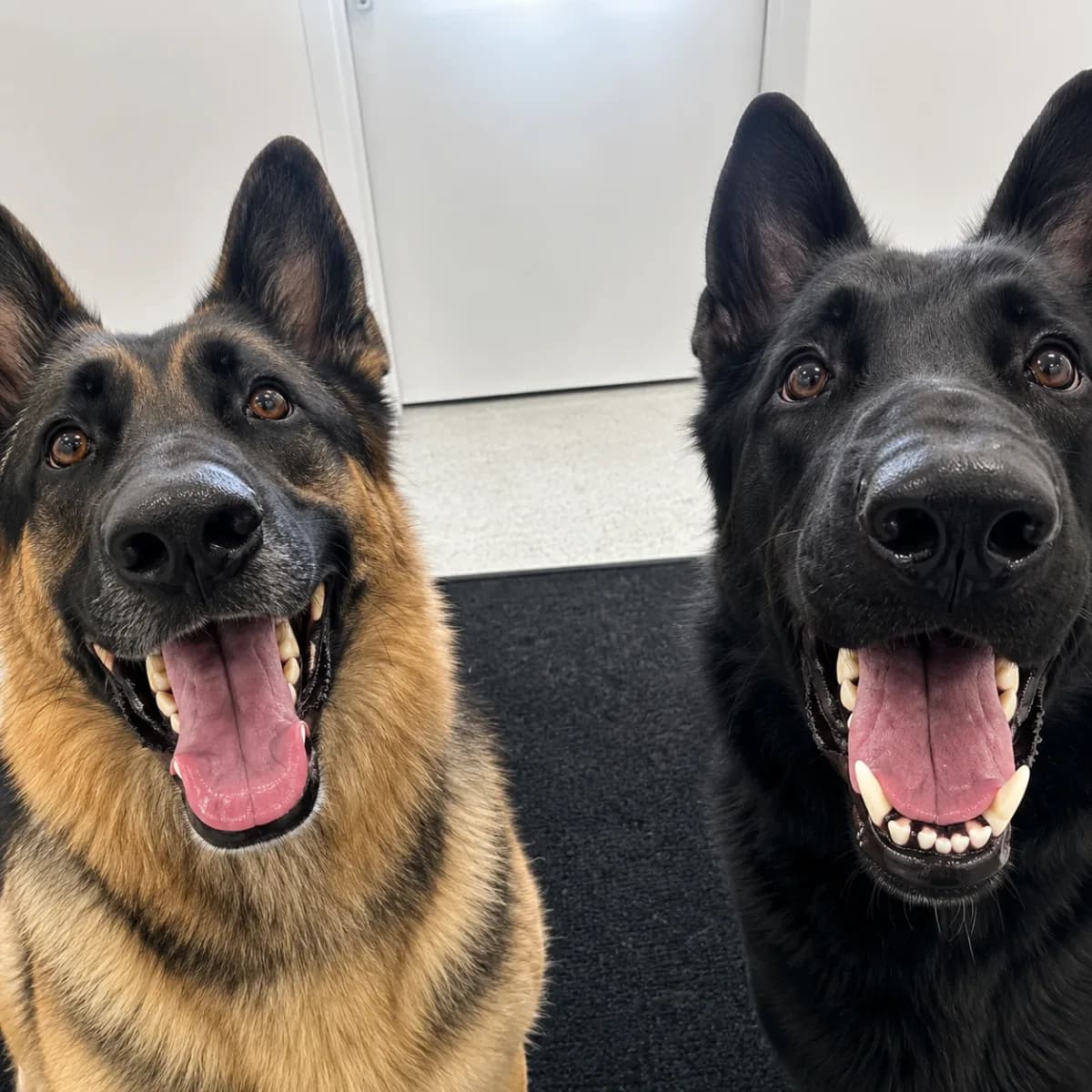
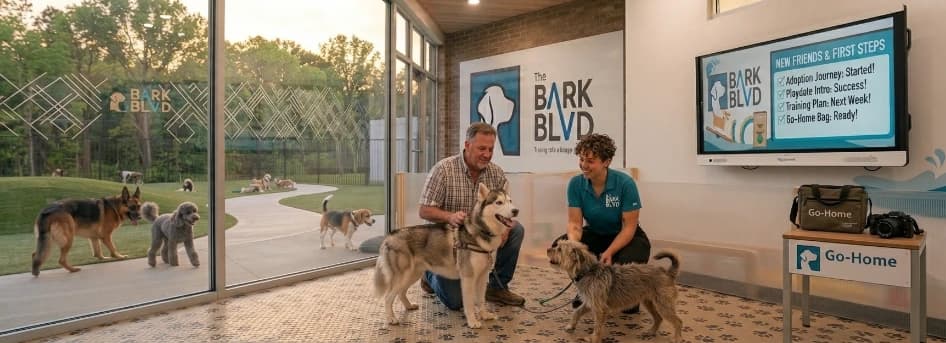
Is dog daycare good for dogs? For the right dog, yes, and often by a lot. A social dog who spends the workday playing, exploring and napping comes home calmer than one who spent nine hours staring at the front door.
But "the right dog" is doing a lot of work in that sentence. Daycare is a group setting, and some dogs simply don't enjoy groups. That isn't a training failure. It's personality.
We'll say it plainly: we'd rather tell a family daycare isn't a fit than watch a stressed dog struggle through a day of play. Here's how to tell which side of the line your dog is on.
What are the real benefits of dog daycare?
Dog daycare benefits fall into five areas: exercise, social play, mental stimulation, less time alone, and routine. Each one supports the others.
Daily exercise that actually tires them out
Most dogs need more movement than a quick walk before work. Supervised group play gives them bursts of running, chasing and wrestling spread across the day.
Think of it like a kid's recess versus a single gym class. Short, frequent play sessions with breaks in between are more natural for dogs than one long run.
Social play with dogs they get to know
Dogs who enjoy other dogs get practice reading body language, taking turns and backing off when a friend says "enough." Over weeks, regular playmates become familiar faces.
This is very different from a dog park, where every visit brings strangers and nobody is screening temperament.
Mental stimulation, not just physical
New smells, new sounds and the problem solving of play wear out the brain as well as the body. A mentally tired dog is often calmer at home than a dog who only went for a jog.
Fewer long hours home alone
Boredom is behind a lot of chewing, barking and digging. Daycare breaks up the long stretch alone, which can ease boredom-driven habits for dogs who struggle with empty days.
One caveat: daycare is not a cure for true separation anxiety. It can help, but a dog with clinical anxiety usually needs a training plan too.
A routine dogs can count on
Dogs love predictability. Regular drop-off, play, nap and pickup give the week a rhythm that many dogs settle into quickly.
Which dogs thrive in daycare?
Dogs who thrive in daycare are social, confident, healthy and comfortable with handling by new people. In practice, that usually looks like:
- Young adult dogs with energy to burn: labs, doodles, shepherds and herding mixes often love it.
- Dog-social dogs: they greet politely, play well and accept "no thanks" from other dogs.
- Puppies who've finished their vaccines: daycare can support puppy socialization once they're old enough.
- Dogs left home for long workdays: daycare fills those hours with something better.
- Confident newcomers: dogs who recover quickly from a new place and new faces.
Which dogs may not do well in daycare?
Some dogs find group play stressful, even in a well-run facility. These dogs often do better with solo play, a dog walker, or in-home care:
- Fearful or reactive dogs: constant exposure to other dogs can push them past their limit.
- Dog-selective adults: many dogs become choosier about friends as they mature, and that's normal.
- Resource guarders: toys, water bowls and space are shared in a group yard.
- Seniors with mobility issues: rough play and long days can be hard on aging joints.
- Dogs recovering from surgery or illness: rest and close medical care come first.
If your dog falls into one of these groups, our dog boarding suites include solo play options, and our behavior training can help some dogs build confidence first.
What are the downsides of dog daycare?
The main downsides are overstimulation, illness spread and minor injuries from play. A good daycare reduces each risk; it can't remove them entirely.
| Risk | Why it happens | What good daycares do about it |
|---|---|---|
| Overstimulation | Hours of nonstop play can tip excitement into stress | Scheduled rest and nap time |
| Illness spread | Dogs share air, water and play space | Required vaccines and daily health checks |
| Play injuries | Scrapes and nips happen when dogs wrestle | Groups by size, temperament and energy |
| Bad habits | Dogs can pick up barking or pushy play | Trained staff who interrupt rough play early |
Canine cough is the most common illness concern. Like a daycare cold in kids, it spreads where dogs gather. That's why the American Veterinary Medical Association (opens in a new tab) recommends vaccination for dogs in group settings, and why vaccine rules matter so much.

How do you know if your dog enjoys daycare?
Watch your dog before, during and after a few visits. Your dog's behavior will tell you more than any brochure.
Good signs:
- Pulling happily toward the door at drop-off
- Coming home relaxed and sleepy, not frantic
- Eating normally and settling easily that evening
Warning signs:
- Hiding, trembling or refusing to go in
- A tucked tail, lip licking or yawning at drop-off
- Unusual clinginess, hiding or snapping at home afterward
- Exhaustion that lasts into the next day
A dog who's tired after daycare is normal. A dog who seems shut down is not. If you're seeing warning signs after the first two or three visits, talk to staff about fewer or shorter days, or a different kind of care.
What makes a dog daycare safe?
A safe daycare screens every dog, groups dogs thoughtfully, requires vaccines and builds rest into the day. Use this checklist when you tour.
- Temperament screening: every new dog should be evaluated before joining group play.
- Size and energy groups: a 10 pound terrier shouldn't play with a 90 pound shepherd.
- Vaccine requirements: rabies, distemper/parvo, Bordetella and, ideally, canine influenza.
- Spay and neuter rules: intact adult dogs can change group dynamics.
- Built-in rest: a midday nap break keeps play from boiling over.
- Trained staff: pet first aid and CPR training is a strong sign.
Here's how that looks at BARK BLVD. Our 8,200 square foot facility in Mount Pleasant, Iowa runs 8 playgroups, 4 indoor and 4 outdoor, organized by size, temperament and energy. Staff are Pet First Aid and CPR certified, and the lobby closes from 12 to 2 PM daily for dog nap time.
Every dog starts with a 20 to 30 minute Meet and Greet. Dogs must be at least 4 months old, current on rabies, DA2PPV, Bordetella and canine influenza per our vaccination and health policy, and dogs over 6 months must be spayed or neutered to join group play under our spay and neuter policy.
How often should a dog go to daycare?
Most dogs do well with two or three days a week, though it depends on age, energy and your schedule. We cover this in more detail in our post on dog daycare vs. boarding.
Think your dog would love a day of play? Book a Meet and Greet or call 319-710-6500.
FAQs
Is daycare good for dogs with separation anxiety?
It can help some dogs, because they spend fewer hours alone and come home tired. But daycare doesn't treat true separation anxiety. A dog who panics when left alone often needs a training plan, and sometimes help from a vet, alongside any daycare days. Start with shorter half days and watch closely for stress signs at drop-off and pickup.
Can puppies go to dog daycare?
Yes, once they're old enough and fully vaccinated. At BARK BLVD, the minimum age is 4 months. Daycare can be a great place for puppies to practice manners with other dogs, as long as the facility separates puppies from rough adult play. Puppies also need plenty of rest, so shorter days are often better at first.
Can older dogs go to daycare?
Many healthy seniors enjoy daycare, especially if they've gone for years and know the routine. The key is a calm, low-energy playgroup and plenty of rest. Seniors with arthritis, poor eyesight or heart issues may find a full day too much. Half days, or boarding with solo play, can be a kinder fit. Ask your vet if you're unsure.
Do dogs get hurt at daycare?
Minor scrapes can happen in any group play, much like playground bumps for kids. Serious injuries are rare at well-run facilities that screen temperament, group dogs by size and energy, and step in early when play gets too rough. Ask any daycare how they handle injuries and how they let owners know.
Why is my dog so tired after daycare?
A day of play is a big workout for both body and brain, so a sleepy evening is normal and a good sign. Exhaustion that lasts into the next day, limping, or loss of appetite is different. If you see those, try fewer days per week, ask about extra rest breaks, and check with your vet if signs continue.
The bottom line
Dog daycare is good for dogs who are social, healthy and confident around new dogs and people. It gives them exercise, play, mental work and a break from long days alone. For fearful, reactive or fragile dogs, other options are usually kinder.
The honest test is your own dog. Try a few visits, watch the signs, and adjust. If you're near Mount Pleasant and want to see whether your dog is a daycare dog, explore our dog daycare and book a Meet and Greet.